Hairstyles for thinning:
A Visual Guide For Women
The right hairstyle cannot change the amount of hair you have—but it can change how your hair frames the face, distributes volume, and reveals areas of visible scalp.
Small Changes.
Stronger Shape.
The goal is not to hide thinning. It is to make the entire hairstyle feel more balanced and intentional.
Less Contrast
Shorter lengths soften the difference between thinner and denser areas.
Better Balance
A stronger overall shape keeps attention from settling on one area.
Strategic Placement
Existing hair is directed where its texture and coverage work best.
Intentional Style
Clean proportions create a more cohesive style and draw attention away from thinning areas.
These examples illustrate changes in haircut and styling only. They do not depict hair regrowth or added density.
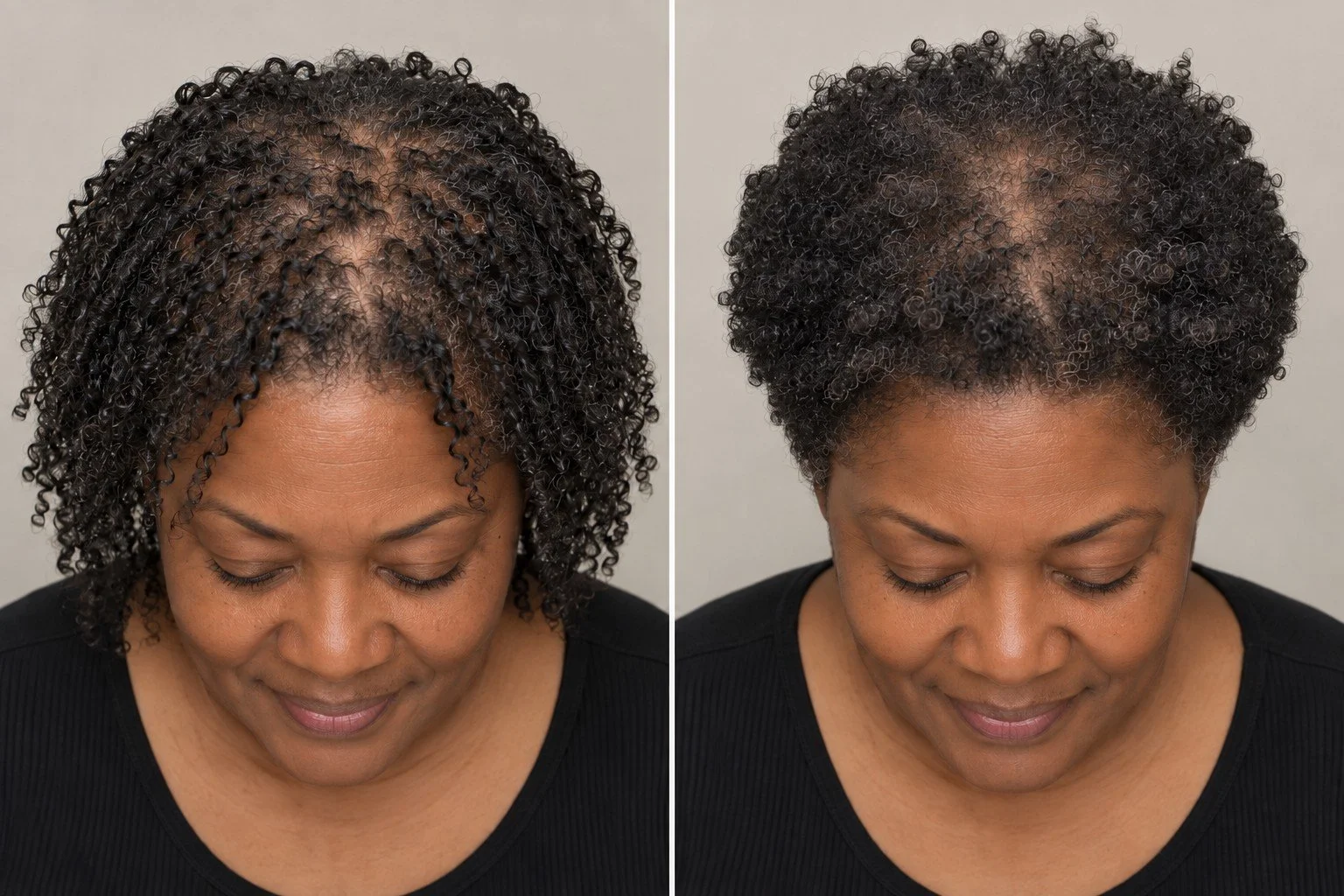
AI visualization. The same degree of hair thinning is represented in both images.
Diffuse Scalp Show-Through?
Rounded Tapered Cloud Cut
A shorter, rounded shape allows natural coils to stack more closely together, helping reduce contrast and soften the appearance of visible scalp without placing tension on fragile hair.
Cut & Styling Details
Why It Works
Keeping the sides and nape shorter removes excess weight from the perimeter while preserving volume through the top. The rounded silhouette allows coils to overlap and diffuse light, making areas of scalp show-through less visually prominent.
What to Ask Your Stylist
“I’d like a dry, free-form tapered cut that removes weight from the sides and perimeter while preserving maximum volume through the top. Please shape the coils in their natural, shrunken state rather than stretching them while cutting.”
Use a lightweight styling foam rather than heavy oils or thick gels that can weigh down the hair and separate coils into smaller sections. Diffuse on low heat while gently lifting the coils from the roots to maintain a soft, rounded cloud shape.

AI visualization. The same degree of hair thinning is represented in both images.
Widening Part?
Deep Side Part with Cloud Bangs
Shifting the part and bringing light, airy pieces forward changes how the existing hair falls, helping interrupt a visible part line while adding softness and lift around the face.
Cut & Styling Details
Why It Works
A deep side part moves the hair away from its usual fall pattern and directs existing strands across the more visible center area. Light cloud bangs add movement around the hairline without taking too much density from the rest of the hairstyle.
What to Ask Your Stylist
“I’d like a deep side part with light, airy cloud bangs and soft face-framing pieces. Please keep the fringe wispy and flexible rather than heavy, and preserve as much fullness as possible through the rest of the hair.”
Blow-dry the roots in the opposite direction from their usual position before sweeping the hair into the side part. This can create temporary lift and help the hair fall more naturally across areas of visible scalp. Avoid creating a severe, perfectly straight part line.

AI visualization. The same degree of hair thinning is represented in both images.
Crown Thinning?
Curly Shag with Crown Layers
Shorter layers through the crown reduce the weight pulling curls downward, encouraging natural lift and helping interrupt areas of visible scalp.
Cut & Styling Details
Why It Works
Longer curls can become heavy, fall flat at the roots, and separate into sections that expose the scalp. Shorter crown layers allow curls to spring upward and overlap more naturally, creating a softer transition between thinner and denser areas.
What to Ask Your Stylist
“I’d like a curly shag with shorter, rounded layers through the crown to encourage lift without removing too much density from the ends. Please shape the layers around my natural curl pattern and keep the overall silhouette soft and balanced.”
Apply a lightweight mousse or curl foam near the roots and diffuse on low heat with the head gently tilted forward or to the side. Avoid heavy creams that pull the crown flat or products that cause curls to clump into large sections and reveal more scalp.

AI visualization. The same degree of hair thinning is represented in both images.
Fine Hair with Wispy Ends?
Classic Blunt Bob
A shorter, one-length cut removes thin, see-through ends and creates a stronger perimeter, helping fine hair appear fuller without changing its underlying density.
Cut & Styling Details
Why It Works
Longer fine hair often becomes increasingly sparse toward the ends. Cutting those thinner lengths into a clean, solid line groups the existing strands together, creating greater visual weight and a fuller-looking baseline.
What to Ask Your Stylist
“I’d like a solid, one-length blunt bob that falls between my jawline and shoulders. Please keep the perimeter clean and uniform, with no thinning-shear work, razor cutting, or wispy texturizing at the ends.”
Use a lightweight volumizing mousse near the roots and keep heavier creams or oils away from the crown. When drying, lift the roots gently while directing the ends into a smooth, cohesive shape that emphasizes the bob’s solid perimeter.

AI visualization. The same degree of hairline recession is represented in both images.
Receding Hairline?
Side-Swept Pixie
A soft, side-swept fringe directs existing hair across the temple, helping reduce the contrast around a receding hairline while preserving a natural, open shape around the face.
Cut & Styling Details
Why It Works
Longer pieces near the front can be directed diagonally across a recessed temple rather than pulled straight back from the hairline. Shorter sides and a softly tapered nape create a balanced silhouette without competing with the finer hair around the front.
What to Ask Your Stylist
“I’d like a soft, side-swept pixie with a closely shaped nape and a gently rounded crown. Please leave enough length through the front to direct the hair diagonally across my temple without creating a heavy or blunt fringe.”
Use a lightweight mousse or styling cream to guide the front pieces forward and slightly to the side. Avoid brushing the hair tightly away from the face, which can expose the temple and place greater visual emphasis on the recessed area.

AI visualization. The same degree of hair thinning is represented in both images.
Postpartum Temple Thinning?
Forward-Swept French Bob
A soft, forward-directed fringe can integrate short postpartum regrowth while placing existing hair across areas of visible scalp around the temples and frontal hairline.
Cut & Styling Details
Why It Works
Postpartum shedding can leave the temples and frontal hairline more visible while short new hairs grow at uneven lengths. A light, irregular fringe incorporates that regrowth into the hairstyle and directs longer strands forward to soften areas of scalp show-through.
What to Ask Your Stylist
“I’d like a French bob with a soft, shattered curtain fringe beginning slightly farther back on the crown. Please bring some of the existing density forward to soften the temples and blend my shorter regrowth into the face-framing pieces.”
Use your fingers to dry the fringe forward and slightly to the side. A small amount of lightweight styling cream or clear brow gel can help guide short baby hairs into the fringe. Avoid tight ponytails and topknots that which pull the hair away from the face and place tension on the hairline.
When Styling Alone Isn't Enough
When part-line widening, temple thinning, or visible scalp remains noticeable after cutting and styling, scalp micro-shading can create the appearance of greater visual density between existing hairs.
Improves how the hair falls
Uses length, shape, part placement, and texture to make more effective use of the hair you already have.
Reduces scalp contrast
Places subtle pigment impressions between existing hairs to soften the contrast between the hair and scalp in areas of visible thinning.
Learn how scalp micro-shading works, where it may be used, and what a natural-looking visual-density result can involve.
Scalp micro-shading is a form of cosmetic scalp micropigmentation. It does not regrow hair, add physical volume, or stop ongoing hair loss.