Hairstyles for thinning:
A Visual Guide For Men
The right hairstyle cannot change the amount of hair you have—but it can change how your hair frames the face, distributes volume, and reveals areas of visible scalp.
Small Changes.
Stronger Shape.
The goal is not to hide thinning. It is to make the entire hairstyle feel more balanced and intentional.
Less Contrast
Shorter lengths soften the difference between thinner and denser areas.
Better Balance
A stronger overall shape keeps attention from settling on one area.
Strategic Placement
Existing hair is directed where its texture and coverage work best.
Intentional Style
Clean proportions create a more cohesive style and draw attention away from thinning areas.
These examples illustrate changes in haircut and styling only. They do not depict hair regrowth or added density.

AI visualization. The same degree of hair loss is represented in both images.
Receding Temples?
Textured Forward Crop
Short, forward-directed texture can soften the transition around an M-shaped hairline while giving the hairstyle a stronger, more intentional shape.
Cut & Styling Details
Why It Works
Layered texture breaks up rigid lines and directs the existing hair slightly forward. This reduces emphasis around the temples without creating a heavy or artificially covered hairline.
What to Ask Your Barber
“I’d like a textured forward crop with enough length on top to direct the hair naturally toward the front. Add broken, piece-by-piece texture and keep the sides clean with a low taper. Leave the front soft and natural rather than creating a heavy, straight fringe.”
Ask your barber to preserve the natural curl pattern while creating a consistent shape. The top should remain short enough that the curls do not separate unevenly around thinner areas.

AI visualization. The same degree of hair loss is represented in both images.
Frontal Thinning?
Soft-Structured Caesar
A short, lightly textured fringe brings the hairstyle forward and lowers the visual focus without creating a heavy or sharply defined front line.
Cut & Styling Details
Why It Works
Bringing the existing hair forward can reduce separation across the frontal area. A softly textured edge avoids the severe, block-like appearance that may emphasize an uneven hairline.
What to Ask Your Barber
“I’d like a soft-structured Caesar with a short, forward-directed fringe and a dry, natural finish. Keep the top short and add light texture through the front so the edge feels organic rather than blunt. Use a mid fade or taper that complements the shape without creating too much contrast.”
The front does not need to form a perfectly straight fringe. Ask your barber to direct and shape the natural coils forward while preserving a soft edge and your natural hairline.

AI visualization. The same degree of hair loss is represented in both images.
Diffuse Thinning?
High-and-Tight Crew Crop
Keeping the top short and reducing weight through the sides creates a cleaner silhouette and lessens the contrast between thinner and denser areas.
Cut & Styling Details
Why It Works
Longer hair can separate and reveal uneven areas of visible scalp. A closely cropped top creates a more consistent shape, while shorter sides keep excess volume from competing with the thinner hair above.
What to Ask Your Barber
“I’d like a high-and-tight crew crop. Bring the fade high through the sides and keep the top about a finger’s width long. Leave it slightly longer at the front so I can create a small amount of natural lift without exposing the thinner areas.”
Ask for an even, close crop that preserves visible texture without allowing individual curls to separate across thinner areas. A low or mid taper may create a softer transition than a high skin fade.
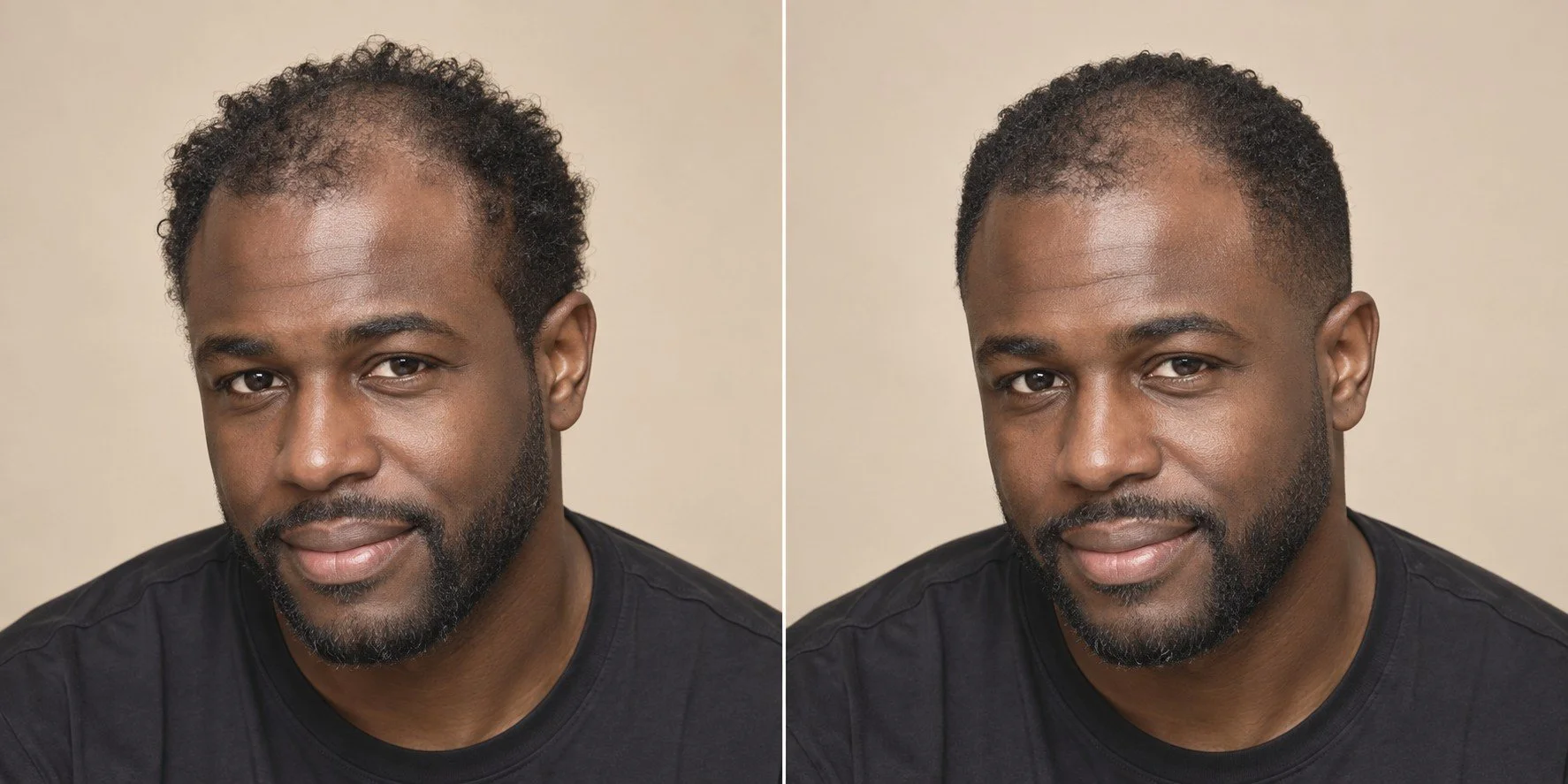
AI visualization. The same degree of hair loss is represented in both images.
Diffuse Thinning with Textured Hair?
Close Textured Crop
A shorter, more consistent shape can keep natural curls or coils from separating unevenly across thinner areas while preserving the character of the hair’s natural texture.
Cut & Styling Details
Why It Works
Longer curls can form separate clusters that reveal more scalp between them. A closely controlled length creates a more consistent pattern while a soft taper gives the hairstyle a cleaner overall silhouette.
What to Ask Your Barber
“I’d like a close textured crop that works with my natural curl pattern. Keep the top short and even enough that the coils don’t separate over the thinner areas. Use a low or mid taper on the sides, and keep the front line-up soft without pushing my natural hairline back.”
Use a small amount of lightweight matte cream or curl-defining product. Avoid heavy gels that separate the hair into rigid clusters and powders that leave visible residue against darker hair.

AI visualization. The same degree of hair loss is represented in both images.
Fine, Thinning Hair?
Deconstructed Side Part
A soft, natural part introduces direction and light structure without creating a severe line that exposes more of the scalp.
Cut & Styling Details
Why It Works
Following the hair’s natural growth pattern provides direction without forcing fine strands into a rigid shape. The softer parting line also avoids creating an exposed strip of scalp.
What to Ask Your Barber
“I’d like a deconstructed side part with a clean low taper. Keep enough scissor-cut length on top to follow my natural parting pattern, but don’t create a hard part with a razor. I want the part to remain soft and slightly relaxed rather than sharply defined.”
Begin with a small amount of lightweight matte product and add more only if needed. Heavy gels and glossy pomades can clump fine strands together and make the scalp more noticeable.
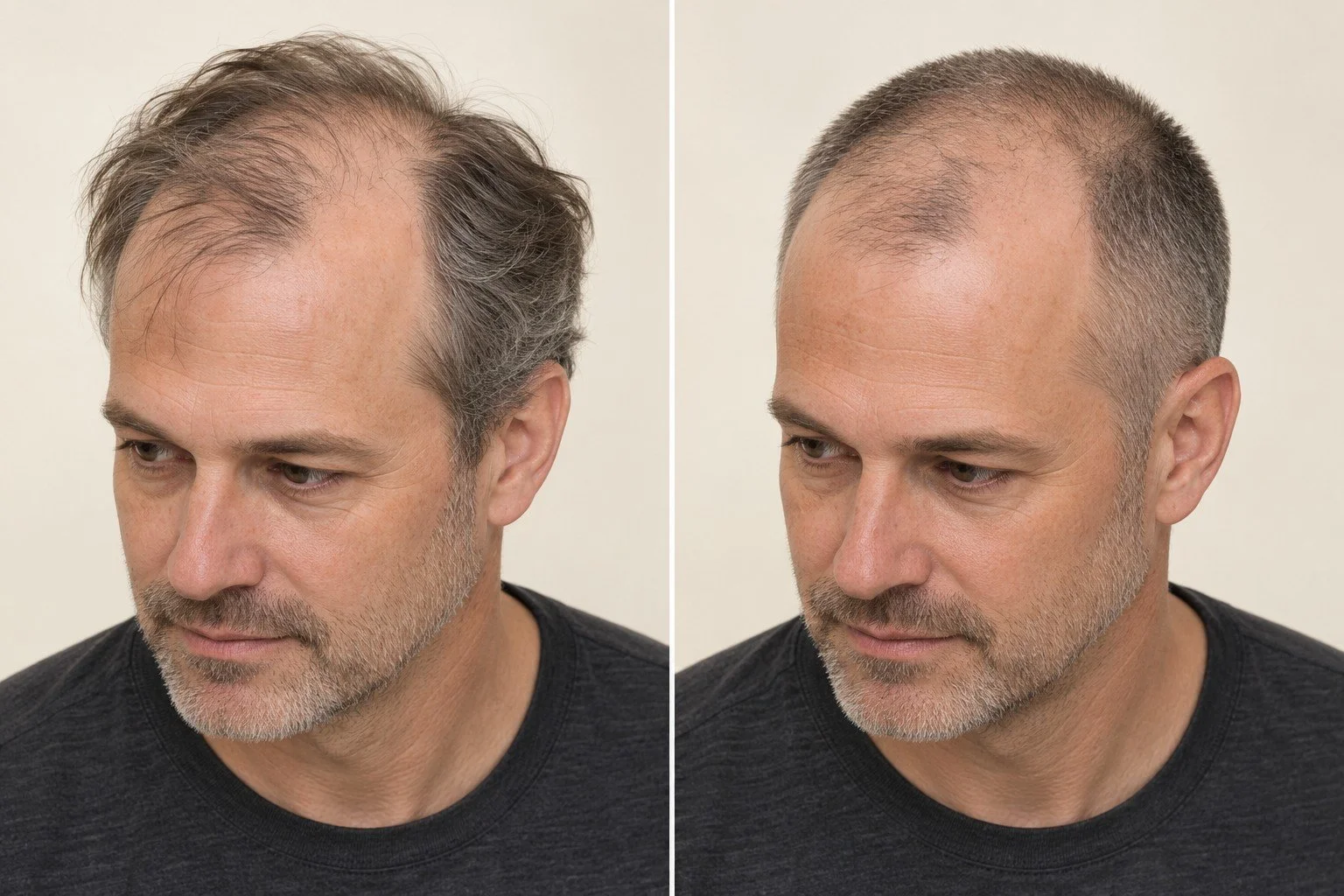
AI visualization. The same degree of hair loss is represented in both images.
Advanced Recession?
Tailored Buzz Fade
Bringing the entire hairstyle closer to the scalp can reduce the contrast created by longer hair around a receding hairline or thinning crown.
Cut & Styling Details
Why It Works
A consistent short length makes the difference between thinner and denser areas less pronounced. Faded sides sharpen the overall silhouette while allowing the natural hairline to feel intentional.
What to Ask Your Barber
“I’d like a tailored buzz fade with a #2 or #3 guard on top. Blend the sides into a clean fade and finish the neckline completely. Keep the front line-up soft and natural—please don’t push the corners back to make the hairline look straighter.”
A high skin fade creates the strongest contrast and a sharper appearance. A low or mid fade offers a softer transition and may better suit your head shape, personal style, or workplace.

AI visualization. The same degree of hair loss is represented in both images.
Thinning at the Crown?
Close Crown Crop
Keeping the crown closely controlled can prevent longer strands from separating around the natural whorl and making the thinner area appear wider.
Cut & Styling Details
Why It Works
Longer hair can divide along the crown’s natural growth pattern, drawing attention to the center of the whorl. A shorter, consistent length creates a neater shape and reduces that separation.
What to Ask Your Barber
“I’d like a close crown crop with a clean mid taper. Keep the top moderately short, but cut the crown closely enough that the hair does not separate around the natural whorl. Follow the direction of my hair growth rather than forcing it into a different pattern.”
Apply only a small amount of lightweight matte product and follow the natural direction of the crown. Heavy product or forceful brushing can divide the strands and expose more scalp.
When Styling Alone Isn't Enough
When visible scalp remains noticeable after cutting and styling, scalp micropigmentation can create the appearance of greater density between existing hairs.
Improves the shape
Uses length, direction, and texture to make better use of the hair you already have.
Reduces visible contrast
Places subtle pigment impressions between existing hairs so the scalp appears less prominent.
See how visual density works, who it may suit, and what a natural-looking result can involve.
Scalp micropigmentation is a cosmetic treatment. It does not regrow hair, add physical volume, or stop hair loss.